Glossary of terms
A short glossary of words that appear in collectible bear descriptions and mean little without explanation.
General terms
OOAK — one of a kind. The piece exists once, with no edition and no number.
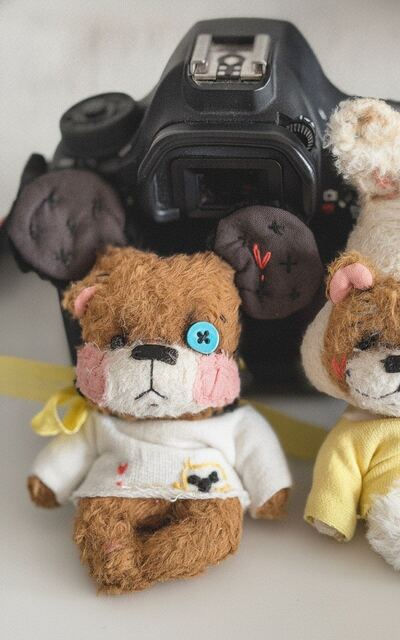
Teddy bear artist (teddist) — a maker who creates artist bears from their own pattern through to a finished piece with a wardrobe.
Artist bear — made by a named maker to their own pattern, as opposed to a manufactured item.
Limited edition — a numbered run (say, 300 pieces). Not the same as OOAK: pieces within an edition are identical.
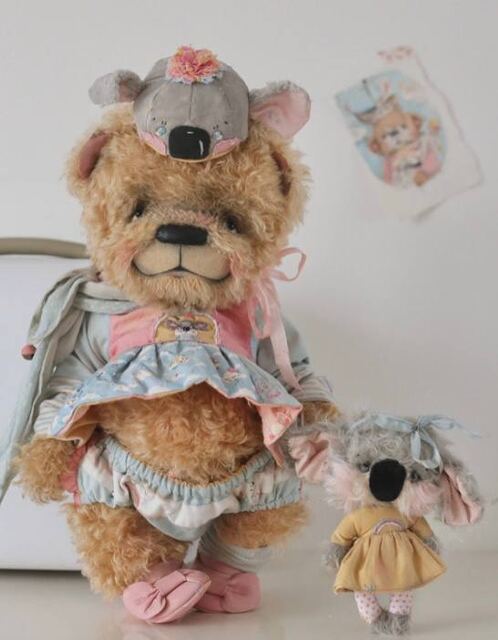
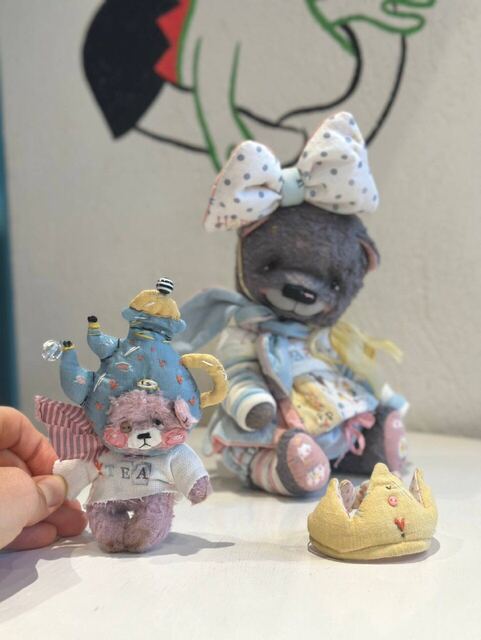
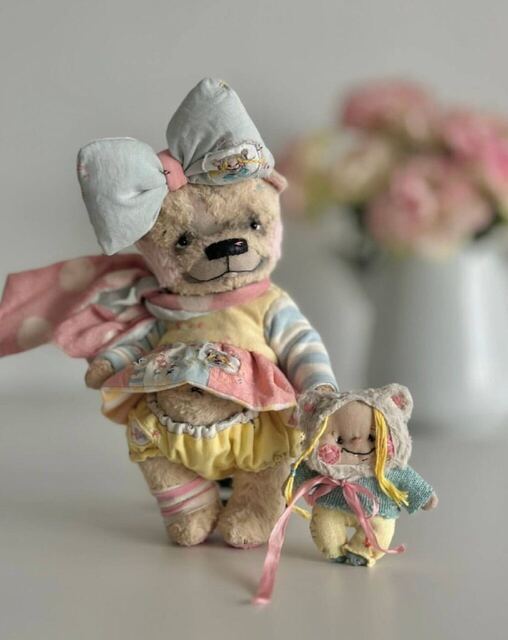
Companion — a small figure included with the bear, turning a figurine into a scene.
Materials
Mohair — pile fabric from angora goat wool on a woven backing. The classic of the genre: it takes trimming, tinting and holds its shape.
Viscose — pile made from cellulose fibre, softer and with a distinctive sheen. Often used for a vintage look.
Alpaca — pile from alpaca wool, soft and matte.
Vintage plush — old fabric, often with a ready-made patina. Valued precisely because new fabric like it cannot be bought.
Construction
Cotter pin jointing — limbs and head attached with cotter pins and discs, so they turn and hold a position.
5-way jointed — the head and all four limbs move.
Excelsior / wood wool — traditional stuffing giving weight and density.
Glass or steel granulate — beads used for weighting, usually low in the body so the bear sits stably.
Tinting — colouring the pile to suggest age and depth.
Growler / squeaker — a mechanism inside the body that makes a sound when the bear is tilted or pressed. Not every bear has one, and its absence says nothing about quality.
Needle sculpting — shaping the muzzle with stitches pulled through the head, rather than by cutting. This is what gives a face an expression.
Backing — the woven base the pile sits on. A dense backing lets the maker trim close without the fabric losing hairs.
Clothing and decoration
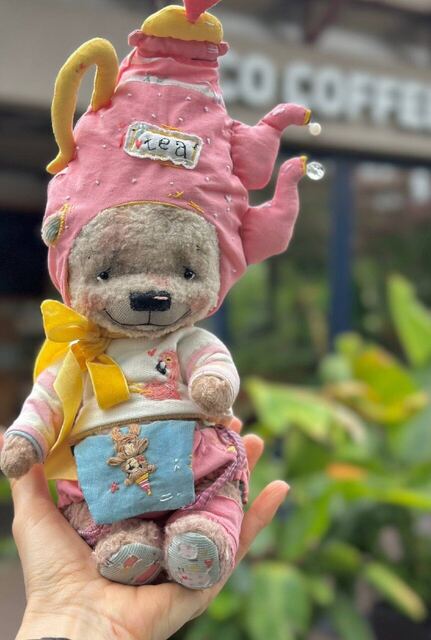
Hand embroidery — worked with a needle, element by element, directly on the garment. Recognisable by the reverse: irregular, with visible thread ends.
Reversible — a garment sewn so that both sides can be worn. One outfit gives two looks and the seams are hidden inside.
Appliqué — a piece of fabric attached to a garment, often as the base for embroidery on top.
Fully removable wardrobe — clothes that come off completely. Matters for cleaning and for changing the bear's look.
Buying and collecting
Adoption — the word collectors use instead of "purchase". Not sentimentality: it reflects that the piece exists once and moves on to one owner.
Reserved — the bear is held for a specific person and is off the market even though the page is still up.
Found a home — sold. Sold pieces usually stay published as an archive: they show what the maker does and how their work has changed.
Certificate — a slip with the name, size, materials and date. There is no single standard for artist bears; each maker issues their own.
Provenance — the history of who owned the piece. For contemporary artist bears it barely matters yet, but for older work it does.
What this looks like in practice
Every piece exists once, so there are never many available at a time. The bears that have found homes are kept here on purpose: they show what the work is like and what will appear next.