Why artist bears cost what they cost
Short version: you are not paying for plush, you are paying for hours. The bulk of an artist bear's price is one person's time, and it cannot be sped up.
Hours, not materials
Fabric, threads, stuffing and fittings are a visible but minor part of the price. The major part is the work: drafting the pattern, cutting, sewing, stuffing, bringing out the face, making the wardrobe and embroidering it. A single bear takes from several days to several weeks. Divide the price by those hours and the hourly rate turns out modest.
Embroidery is the expensive part
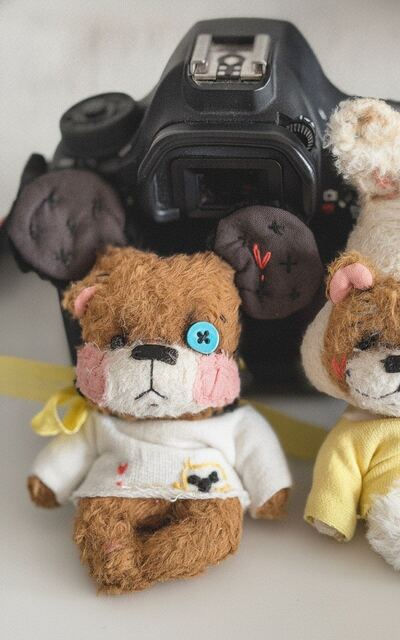
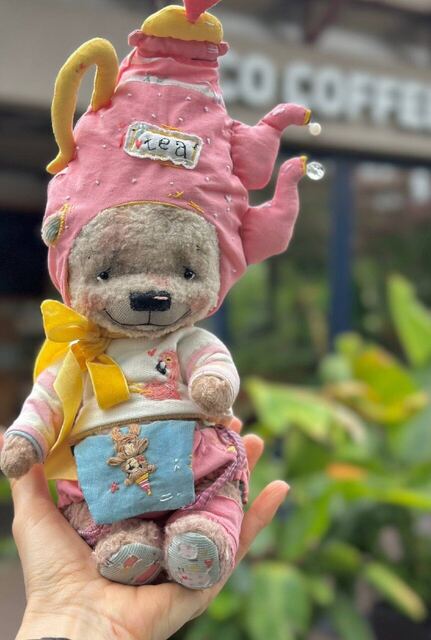
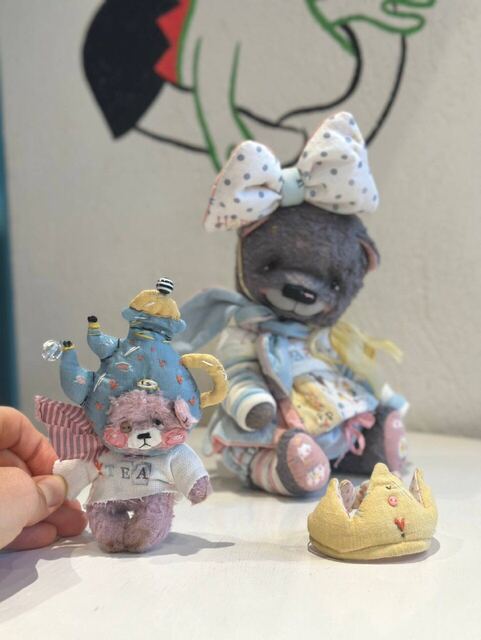
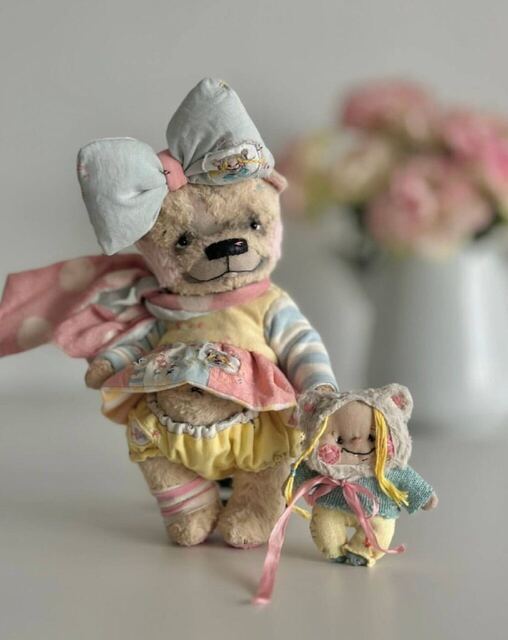
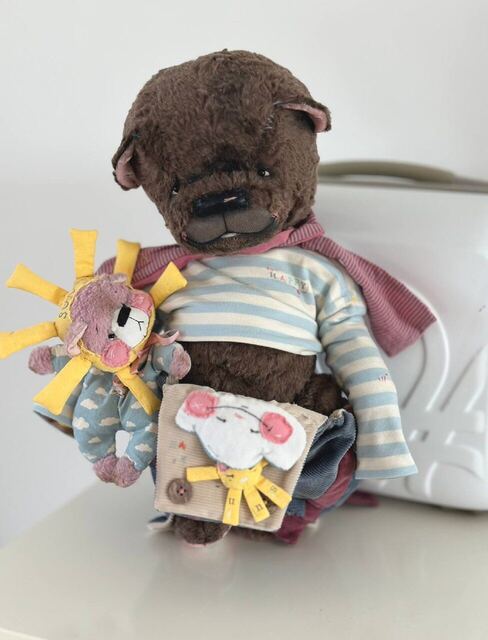
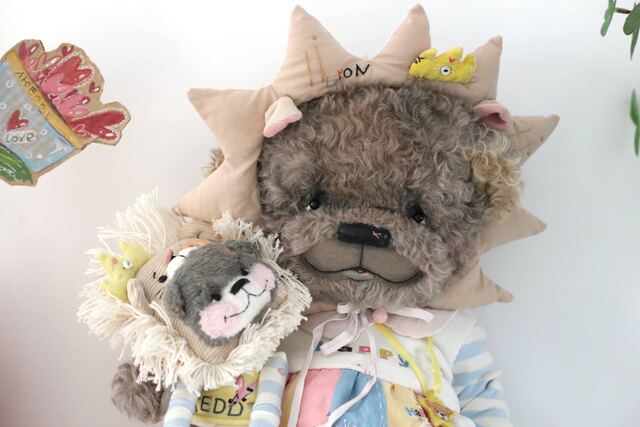
Every element on the clothing goes in with a needle: a bird on a bonnet, a hare on a hem, a word across knitwear, a tiny heart on a pocket. Dozens of elements on one outfit. This is not a print and not a ready-made patch that can be stitched down in a minute — these are hours that only show up close. They are exactly what separates a €150 bear from a €600 one.
A single existing piece
A factory spreads pattern development across thousands of units. An artist carries all of that development on one piece. Unit cost is therefore fundamentally higher — that is arithmetic, not a markup.
What drives the range
- Size. A larger bear means more material and considerably more hours.
- Amount of embroidery. The main multiplier.
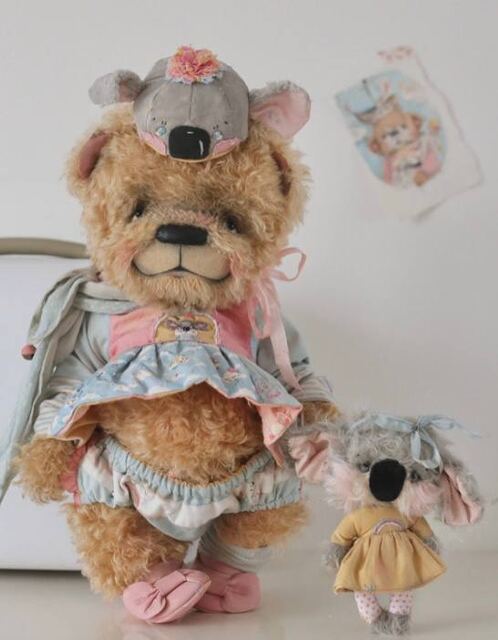
- Wardrobe. One dress, or a full set with shoes and headwear.
- Companion. A small friend included is effectively a second piece.
What the price looks like in hours
The easiest way to understand the number is to break the work into stages. The orders of magnitude run like this:
- Pattern and cutting — a few hours if the character already exists, several days if the pattern is new and has to be reworked.
- Assembly and stuffing — a day or two. Wood wool goes in tightly, in small handfuls; how tightly decides whether the bear holds a pose or slumps.
- The face — comparable in time to the entire body. Millimetres decide everything here: an eye moved a millimetre and a half changes the whole expression.
- The outfit — usually longer than the bear itself.
- The embroidery — the stage that multiplies everything. A single scene on a pocket can take an evening, and an outfit may carry dozens of them.
That is where the spread comes from: a plain bear and a bear in a fully embroidered outfit differ not in materials but in weeks of work.
Why different makers charge differently
The question arrives the moment you start comparing. There are exactly three reasons, and only one of them is about quality.
- How much work is in the piece. Only comparable things are worth comparing: a bear with an embroidered wardrobe and a companion is three objects, not one.
- How well known the maker is. Work by an artist people already collect costs more at the same labour. That is not a surcharge for a name — it is a queue: a known maker has fewer bears than people who want them.
- Where the maker is on their path. Beginners price low deliberately; they need their first owners. Hence the collectors' rule of thumb: buy early.
What to expect at each level
Rough guides for the artist bear market as a whole, not only for our work:
- Under €150. A small bear, 8–15 cm, simple clothes. A good way to find out whether the genre is for you at all.
- €150–500. Mid size, a considered outfit, sometimes embroidery. The bulk of what actually changes hands.
- €500–1500. Either a large piece, or a smaller one carrying a lot of hand embroidery and a companion. This is the bear a shelf gets built around.
- Above that. Makers with a name and an exhibition history.
Why it can't be cheaper
It can — but then it becomes something else: a printed motif instead of hand embroidery, a bought pattern instead of an original, an edition instead of a single piece. Each of those shortcuts lowers the price and lowers, by exactly as much, the thing people come to artist bears for.
What this looks like in practice
Every piece exists once, so there are never many available at a time. The bears that have found homes are kept here on purpose: they show what the work is like and what will appear next.