How to start collecting
A collection almost never starts deliberately. Usually someone buys one bear that caught them, and a year later finds there are five.
Where to start
Not with theory and not with a budget — with what you like. Look at a dozen pieces by different makers and notice where your eye stops: proportions, the expression of the face, the palette, whether there's a story. After a few rounds it becomes clear what is actually yours, and choosing gets easier.
Your first piece
A sensible start is a small bear by a maker you like. That way you learn the difference between a photograph and the object in your hands: how the pile sits, how the face is worked, what the embroidery feels like. One such meeting teaches more than a month of reading.
What to look at
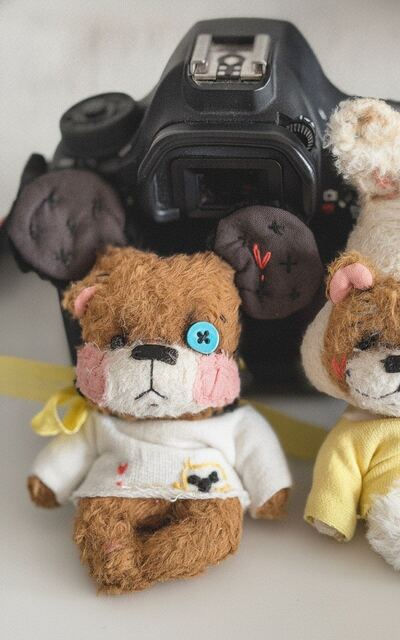
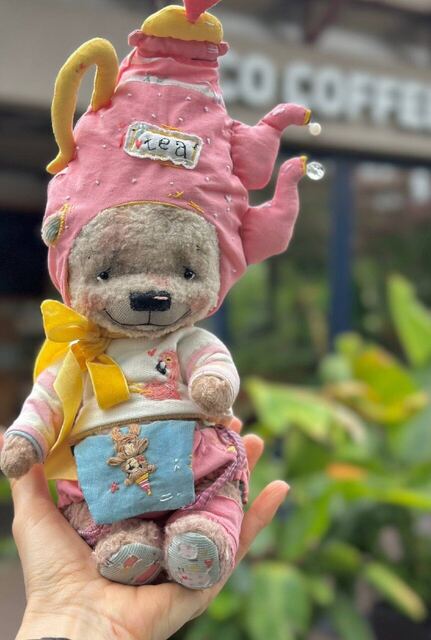
- The face. The main thing. If the bear looks back at you, the rest is secondary.
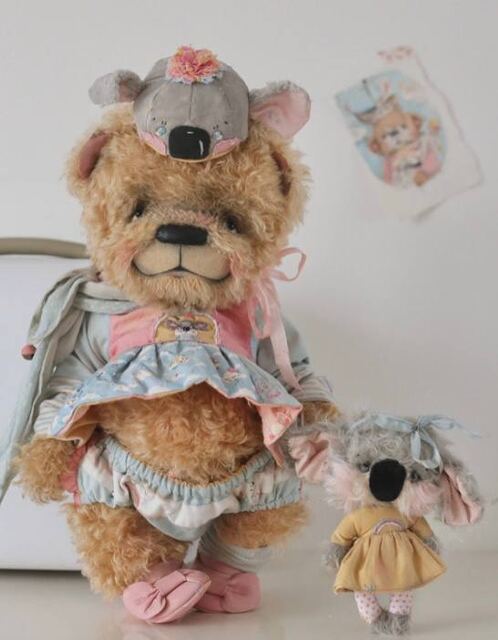
- Symmetry and stance. Whether the head sits straight and the body holds its position.
- The unseen side. Tidiness where nobody looks says more about a maker than the hero shot.
- Embroidery. Hand work reads as alive and slightly irregular. Factory work reads as sterile.
- Photos. Ask for shots from every angle in daylight.
Beginner mistakes
Chasing a bargain. Artist bears are not an investment instrument. Buy what you want to live with and treat any appreciation as a pleasant side effect.
Buying from one angle. Half the impression lives in the profile and in how the bear stands or sits.
Thinking too long. A single-piece work does not wait. If the hesitation is only about price, that's one thing; if it's about whether you like it, you usually don't.
Where to look
Specialist artist-bear marketplaces, makers' own sites, artists' social media and offline fairs. The last is the best option for a first purchase: you can hold the work and talk to the person who made it.
What to ask the maker before buying
Questions an honest maker answers without hesitating. Evasive answers are themselves an answer.
- Is the pattern your own. Working from a bought pattern is not a sin, but it is a different object at a different price.
- Is this the only one. Ask it directly: have you made this bear before.
- Is the embroidery worked by hand. And ask for a close photograph — hand work is obvious at that distance.
- What is inside and what does it weigh. Wood wool, granulate, wadding — this decides how the bear sits in your hands.
- Do the clothes come off. Not a detail: it decides whether the piece can be cleaned and changed.
How to start a collection
Three approaches that come up most often. None is better than the others — what matters is picking one, or the shelf turns into a random assortment.
- By maker. Follow one artist and watch their handwriting change. The most coherent route, and the cheapest at the start: work by a maker nobody has discovered yet costs less.
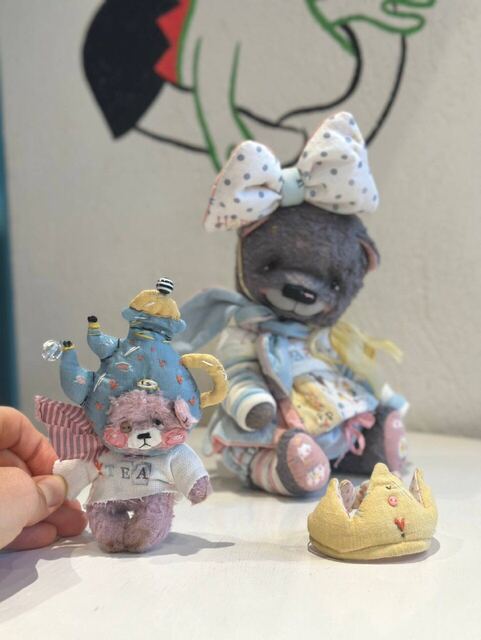
- By theme. Only bears with companions, only one palette, only small ones. The theme itself tells you what to take and what to leave.
- By feel. Buying whatever strikes you, with no system at all. The collection ends up uneven but honest.
How many bears a year
A common beginner's question, and the answer usually disappoints: two or three. Not because of cost, but because an artist bear takes weeks, and a maker you like will not produce many pieces in a year. Artist bear collections grow slowly — this is not a genre where a shelf fills in a season.
Keeping them
Nothing complicated, but three things matter. Direct sunlight bleaches dyed fabric — it is the main enemy and it works invisibly, over months. Damp is worse than dust: wood wool stuffing absorbs it. Take dust off with a soft brush, not water and not a vacuum. Everything else is up to you: an artist bear can live on a shelf or travel with you, which is what it was made for.
What this looks like in practice
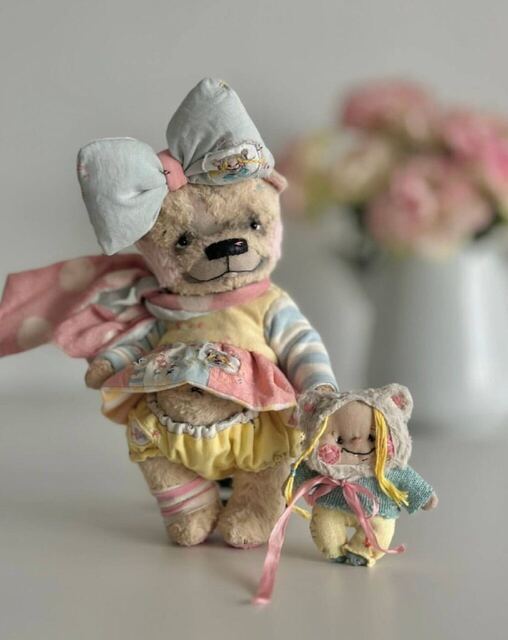
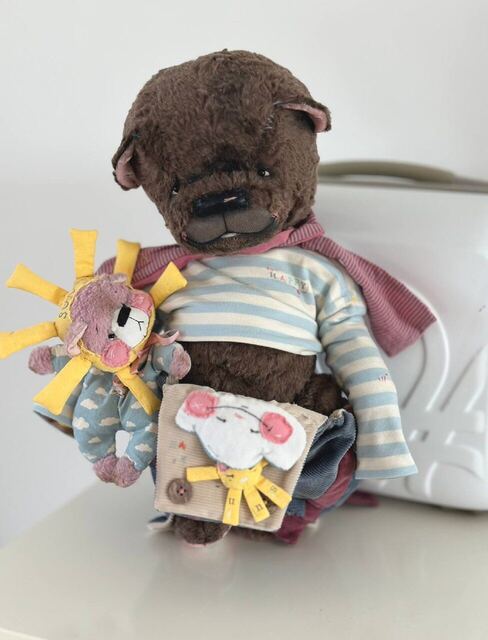
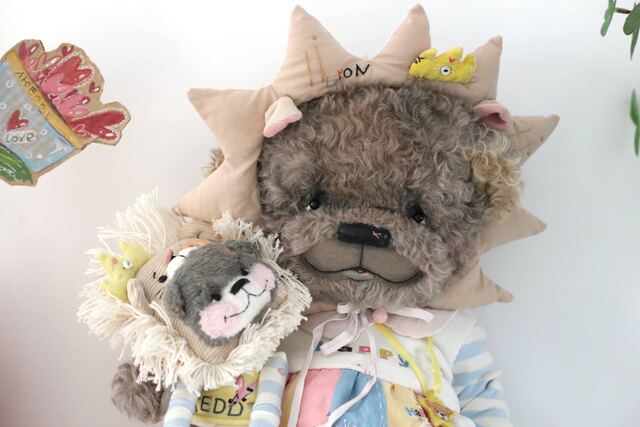
Every piece exists once, so there are never many available at a time. The bears that have found homes are kept here on purpose: they show what the work is like and what will appear next.