Antique, vintage or artist teddy bear
Three different things hide behind the words "old teddy bear": an antique bear that really is a hundred years old, a vintage bear from the middle of the last century, and a brand-new artist bear sewn in the old style. They look alike in photos and are very different in hand.
Three words, three ages
- Antique. Collectors usually mean bears made before the Second World War, from the first Steiffs of 1903 to the 1930s.
- Vintage. Bears from roughly the 1950s to the 1980s, when factories moved to new fabrics and the shape grew rounder and more childlike.
- Artist bear. A contemporary one-of-a-kind piece by a named maker. It can be sewn in an antique style, but it is new, and an honest maker says so. What an artist teddy bear is.
Signs of an early bear
- Silhouette. Long arms reaching to the knees, a hump on the back, long narrow feet, a long muzzle. Early bears looked more like real bears.
- Eyes. The earliest bears have black boot-button eyes; glass eyes came later. Plastic safety eyes belong to the post-war era.
- Stuffing. Wood wool, which crunches slightly when pressed.
- Fabric. Mohair, often worn thin at the muzzle and paws; felt paw pads. How mohair ages is covered in mohair teddy bears.
- Labels. Steiff's button in the ear (since 1904), the tags of Hermann, Merrythought, Chad Valley. Labels get lost, and fake Steiff buttons exist, so a label alone proves little.
Signs of a vintage bear
A rounder head, shorter arms, a flatter face, synthetic plush alongside mohair, plastic eyes, foam or synthetic stuffing. These bears were made as children's toys and often show it: lovingly worn, repaired, sometimes re-dressed.
New bears in the old style
Many artists sew bears in an antique style: long limbs, a hump, distressed or sparse mohair, wood wool. Steiff also makes replicas of its historic models. This is not forgery but a genre in its own right, and a good maker always states the materials and the year. If a seller is vague about age, ask directly.
What each kind gives a collector
| Antique | Vintage | Artist bear | |
|---|---|---|---|
| Story | a century of unknown owners | someone's childhood | a maker you can talk to |
| Condition | decides the value; fragile | varies | perfect, from the maker's hands |
| Risk | fakes, moth, hidden repairs | moderate | minimal |
Old bears are valued by maker, condition and provenance; that is covered in what a teddy bear collection is worth. How the teddy bear got here at all: teddy bear history. And who collects them: arctophiles.
Tonya's bears
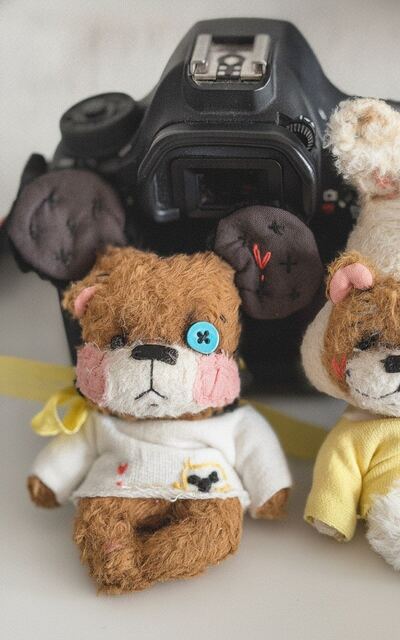
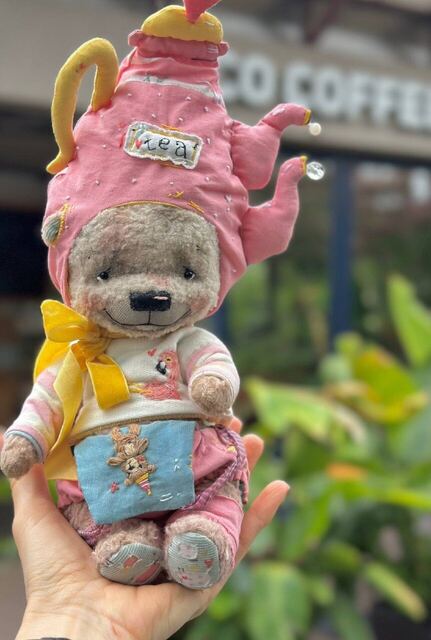
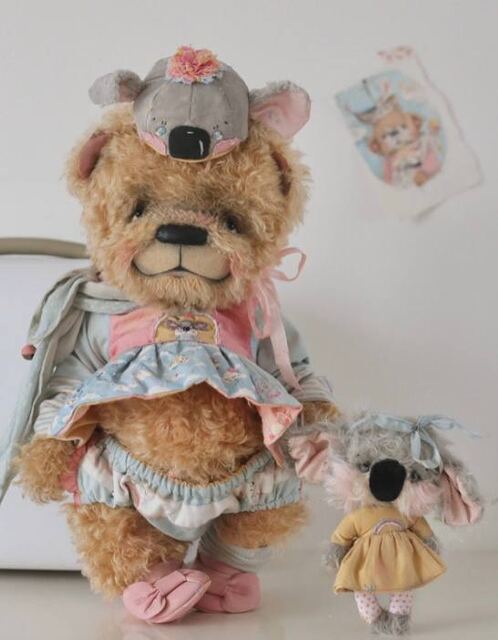
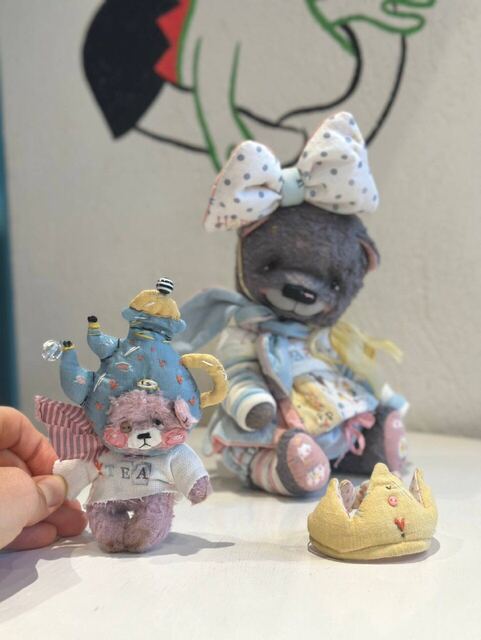
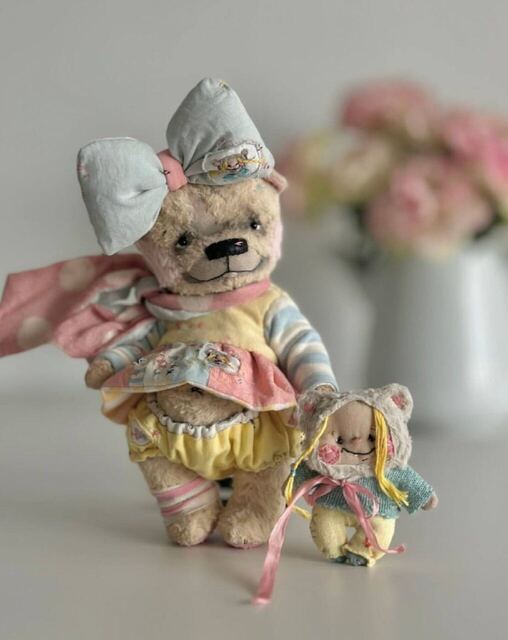
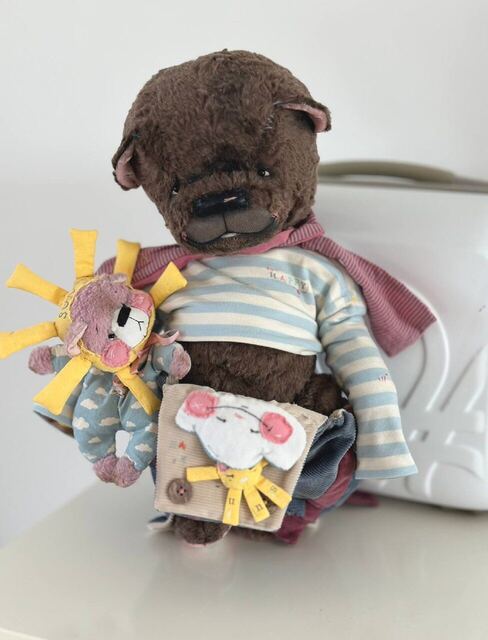
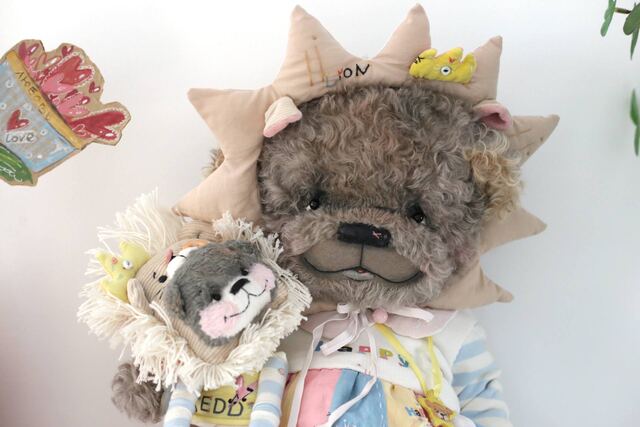
Antonina Vakhrushina makes artist bears: new, one of a kind, to her own pattern. They keep the old materials, German mohair or viscose, wood wool stuffing and glass eyes, but they do not pretend to be old: each piece has a name, a year and an embroidered outfit. See the collection.
Frequently asked questions
How can I tell if a teddy bear is antique?
Look at the shape, eyes and stuffing: long arms, a back hump, long feet and muzzle, boot-button or glass eyes, wood wool stuffing and mohair with felt pads point to a pre-war bear. A label such as Steiff's button in the ear helps, but labels can be lost or faked.
What is the difference between a vintage and an antique teddy bear?
Antique usually means made before the Second World War; vintage means roughly the 1950s to the 1980s, when bears became rounder and synthetic fabrics and plastic eyes arrived.
Are new artist bears made to look old?
Many are sewn in an antique style with distressed mohair and wood wool. That is a genre, not a forgery: a good maker always states the year and the materials.
What this looks like in practice
Every piece exists once, so there are never many available at a time. The bears that have found homes are kept here on purpose: they show what the work is like and what will appear next.