What is an artist teddy bear
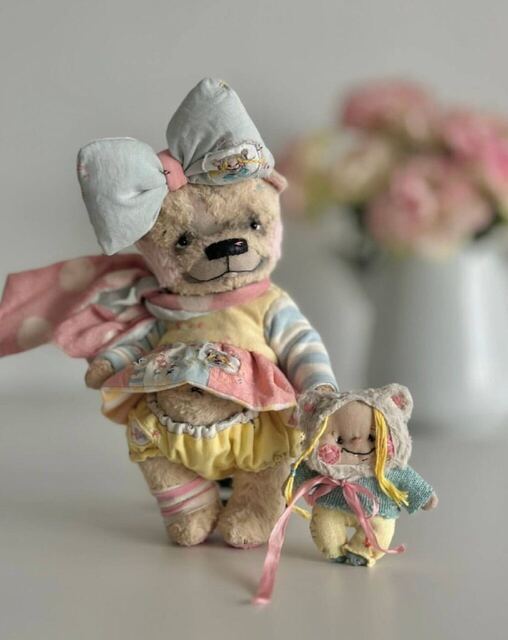
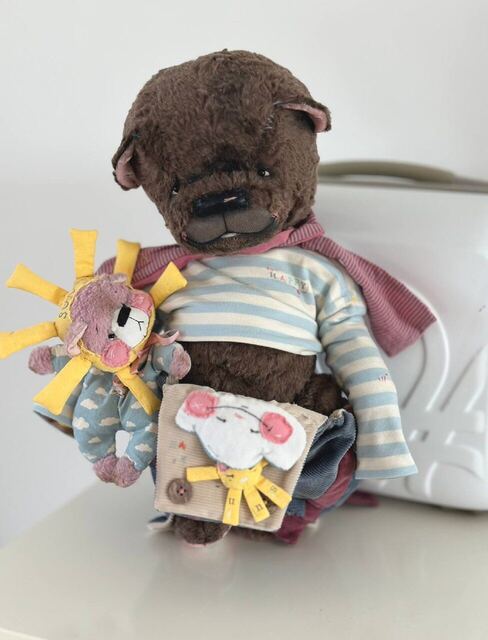
An artist teddy bear is the work of a named maker, produced as a single piece rather than manufactured. The difference between that and a factory toy is roughly the difference between a painting and a poster.
What OOAK means
OOAK stands for one of a kind. In collectible toys it marks a piece that exists exactly once: no series, no limited edition, no "number 20 of 100". A second one will never exist, not even from the same maker.
Who a teddy bear artist is
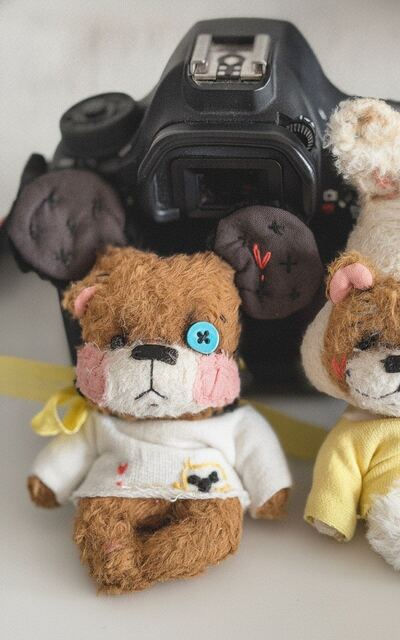
A teddy bear artist invents the character, drafts their own pattern, chooses the fabric, sews and stuffs the body, works the face and makes the wardrobe. This is not assembly from ready-made parts: the pattern is the maker's own, and experienced collectors recognise an artist's work the way they recognise handwriting.
How it differs from a plush toy
- Edition. A factory toy comes in thousands of identical copies. An artist bear is one.
- The face. Stamped in a factory. Shaped by hand by an artist, where a millimetre decides whether the bear reads as thoughtful or mischievous.
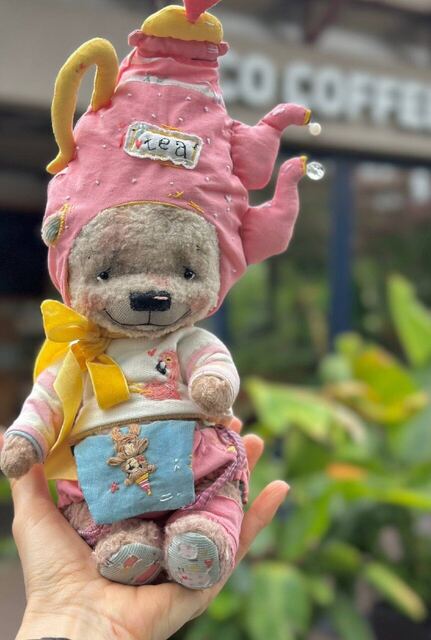
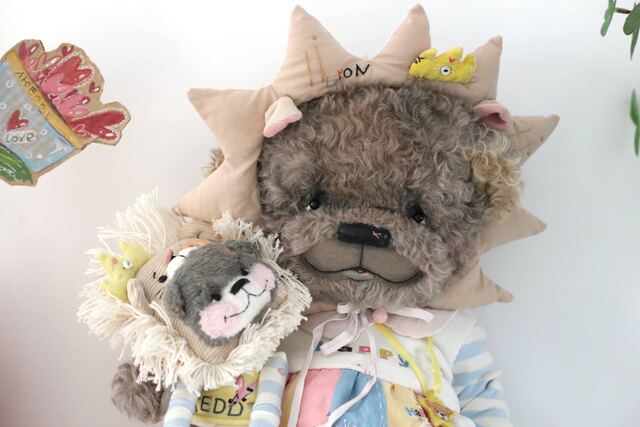
- The clothes. Factory garments are run off a line, decoration printed or applied as ready-made patches. On an artist bear the embroidery goes in with a needle, element by element.
- Value over time. Mass-produced toys lose value. Work by a known artist usually doesn't.
What they're made from
Materials vary: mohair, viscose, alpaca, vintage plush, cotton. There is no single standard — every maker works with whatever gives the texture they want. So it's always worth reading the materials on the individual piece rather than relying on the word "plush".
Is it a toy or a collectible
Both. Artist bears are bought by adults — for themselves, for a collection, as a gift — but they aren't museum exhibits. A well-made bear takes hugs and journeys in its stride. Only the embroidery and the small parts of the outfit want care.
How to tell an artist bear from a copy
The market is full of factory bears sold as "handmade", so it helps to know what actually distinguishes the real thing. Four checks cover most cases.
- Ask for the maker's name. An artist bear always has one. If the seller can only name a shop or a brand, you are looking at production.
- Look at the back of the embroidery. Hand embroidery has an irregular reverse, visible stitch ends and slight tension differences. Printed motifs and ready-made patches are uniform on both sides.
- Compare two photos of the same model. If a second identical piece exists, it is an edition, not a one-off. Serious makers say plainly which of the two they are selling.
- Watch the face. Factory faces are stamped and symmetrical. A hand-shaped muzzle is never quite even, and that is exactly where the character sits.
Sizes and what they are for
Artist bears run roughly from 8 to 60 cm, and size changes what the piece is for rather than just how much it costs.
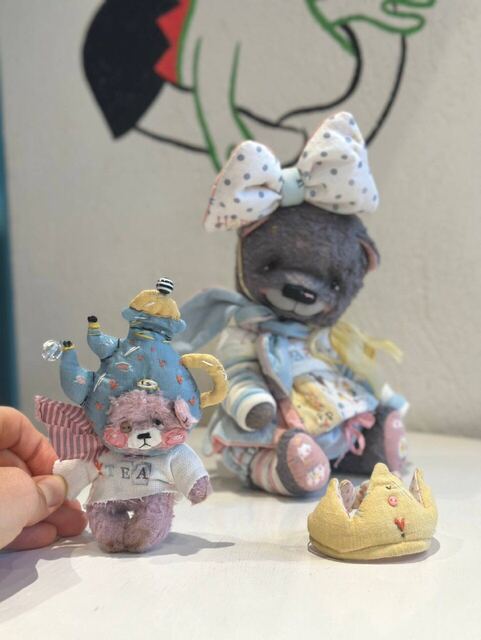
- 8–15 cm. Pocket bears. They travel, sit on a desk, go in a bag. Often the first piece someone buys, because the entry price is low.
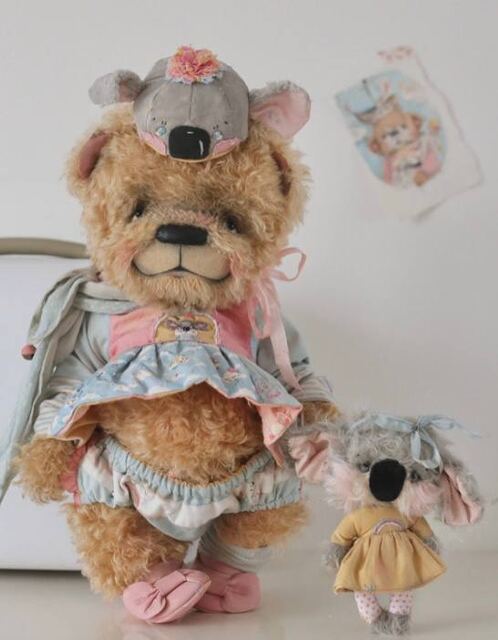
- 20–30 cm. The most common range. Big enough to hold properly, small enough for a shelf. Most wardrobes and companion pieces are made at this size.
- 40–60 cm. Statement pieces. They take the longest to make — the larger the bear, the less forgiving the proportions — and they are usually the ones that get named and photographed most.
What drives the price
Two bears of the same height can differ several times in price, and the reason is almost never the fabric. It is time. A face takes as long as the whole body. A garment covered in hand embroidery takes longer than the bear it goes on: every miniature scene, letter and animal goes in stitch by stitch, and none of them repeats, because a hand stitch never lands twice the same way.
The second factor is the maker. Work by an artist whose bears are already in collections holds its price, and the earliest pieces by a maker who later became known tend to be the ones collectors chase. Buying early is how most collections start.
Where artist bears come from
The teddy bear is a little over a century old, and for most of that century it was a factory product. The artist bear appeared much later, in the 1970s in the United States and Britain, when individual makers began selling bears under their own names rather than a company's. What had been a toy became a form with authorship — and, like any such form, it grew a vocabulary, its own conventions and a collector base that follows makers the way people follow illustrators or ceramicists.
Living with one
Nothing about an artist bear demands a display case. Keep it out of direct sunlight, which fades dyed fabric faster than anything else, and away from damp. Dust with a soft brush rather than water. The embroidery and the small fastenings on the clothes are the delicate part; the bear itself is built to be picked up. That is the whole point of making it by hand — a piece meant to be lived with, not guarded.
What this looks like in practice
Every piece exists once, so there are never many available at a time. The bears that have found homes are kept here on purpose: they show what the work is like and what will appear next.