Artist bear, Steiff and factory toy
Three things that everyday language calls "a teddy bear" belong to quite different categories. Here they are in order.
A factory toy
Mass production, editions in the thousands, the same stamped face on every unit, synthetic materials, printed or ready-made applied decoration. Inexpensive, loses value over time, never becomes collectible. That isn't a flaw — it is a different job: a toy is supposed to be affordable.
Collectible Steiff and similar makers
Steiff, Hermann and the other German manufactories are factories, but factories with more than a century of history and their own standards. The key difference from the mass segment is the limited edition: a run might be 500 or 1,500 pieces, each numbered and certified. Materials are good, often mohair. These bears genuinely are collected, and rare runs appreciate.
But a piece within such an edition is not unique: it has brothers and sisters that differ only by number.
An artist bear
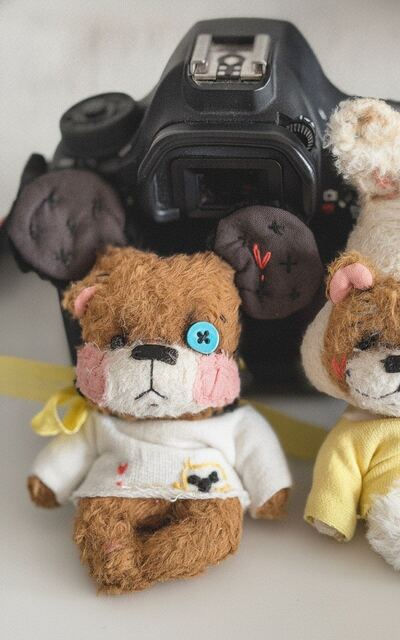
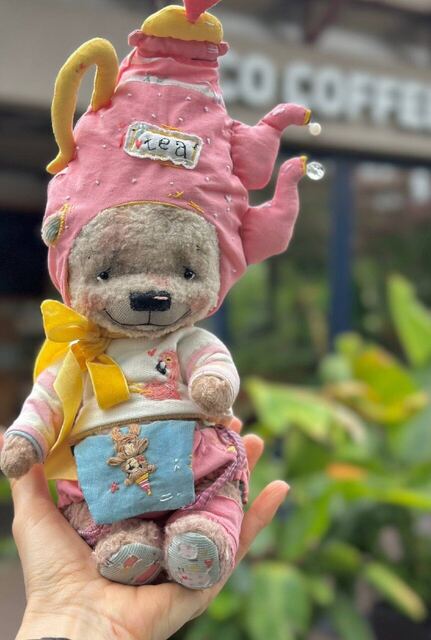
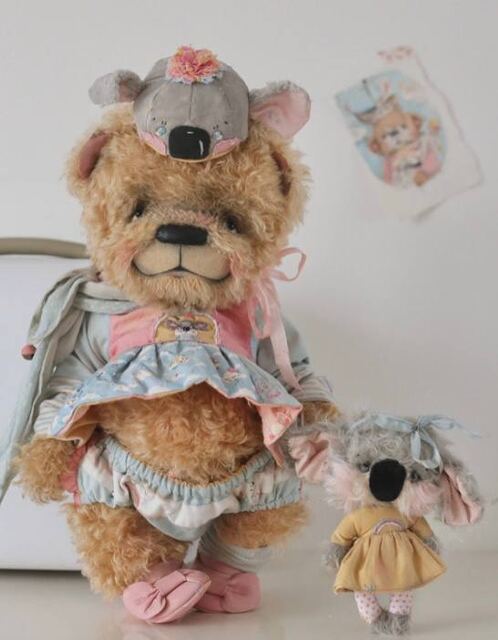
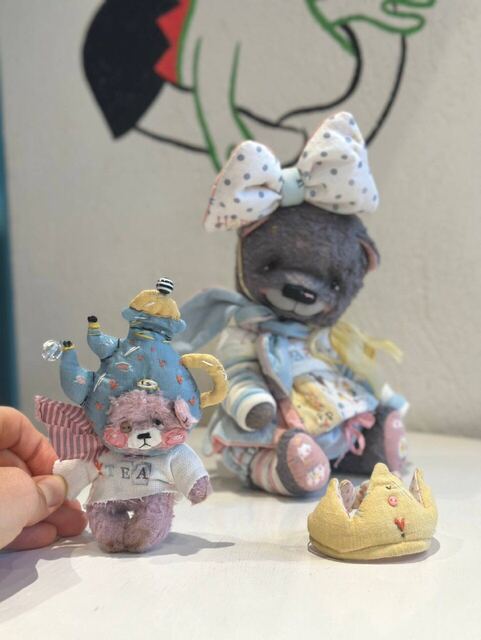
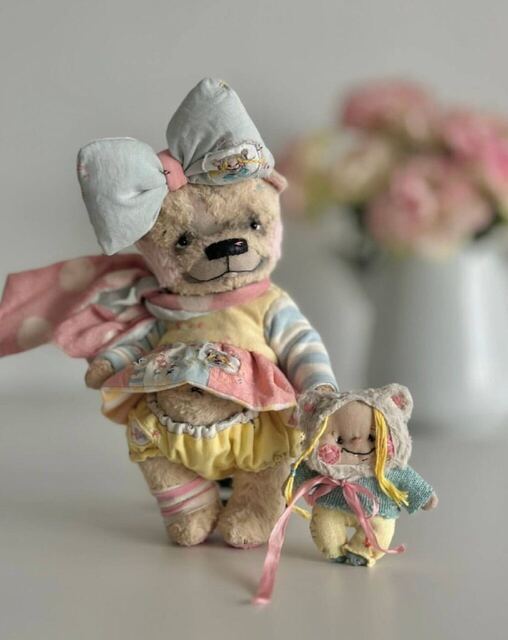
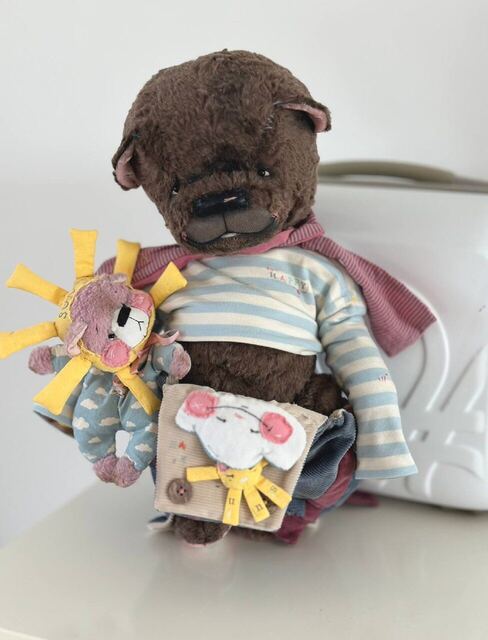
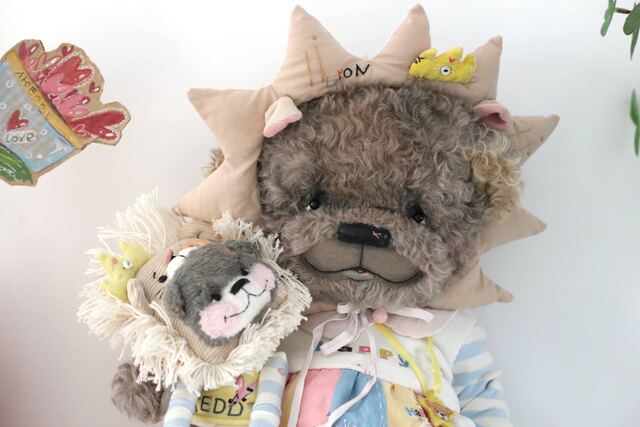
The work of a single maker, existing as one piece. No edition, no number — and it cannot be repeated even by the artist, because hand embroidery never lands twice the same way. Materials are chosen for that specific bear rather than to meet a series specification.
Value here rests not on the rarity of a number but on the maker's name and on the fact that a second one physically does not exist.
In short
- Factory toy — thousands identical, loses value.
- Collectible Steiff — hundreds numbered, rare runs appreciate.
- Artist bear — exactly one, impossible to repeat.
The button in the ear — and what it proves
Steiff's mark, in use since 1904, proves exactly one thing: that the bear was made by Steiff. It says nothing about edition size and nothing about handwork. The same button sits in a thirty-euro series bear and in a thousand-euro numbered collector's piece.
Artist bears have no equivalent, and that is not a shortcoming. In place of a brand mark there is the maker's name, often with a certificate or a handwritten tag. Collectors recognise the work anyway, the way you recognise handwriting — by the cut of the muzzle, the set of the eyes, the character of the stitching.
What actually happens to the value
This is where most arguments go wrong, so taken in order:
- Series toys lose. Bought at 40, worth 10 second-hand, because a thousand more are always available.
- Limited Steiff editions sometimes appreciate, but not reliably. It depends on the size of the run, the condition, and whether collectors took to that series at all. Plenty of 1990s editions still sit below their issue price.
- Artist bears follow a different logic: there is simply no second copy to push the price down. Value tracks how well known the maker becomes, which is why early pieces by an artist who later found an audience are what collectors hunt for years afterwards.
Honestly: if you are buying for return, both are a poor instrument. Bears are not an investment product, and treating them as one takes the pleasure out of owning them.
Can you collect both
Most people do. A Steiff on the shelf and an artist bear on the sofa are not in competition — they answer different questions. One is a piece of industrial history with papers; the other is the work of a person you can write to. Owning both tends to make each of them easier to understand.
Which to choose
If you want a recognised brand with a certificate and a predictable resale value, that's Steiff. If you want an object nobody else has and direct contact with the person who made it, that's an artist bear. Many collectors arrive at the second in time: a certificate stops being a substitute for character.
What this looks like in practice
Every piece exists once, so there are never many available at a time. The bears that have found homes are kept here on purpose: they show what the work is like and what will appear next.