Teddy bear sizes
Size decides more than price on an artist bear — it decides what the piece becomes for you. Here is the chart in centimetres, and what sits behind each row.
| Height | Called | What it is for | Price |
|---|---|---|---|
| 8–15 cm | pocket, mini | travels with you, lives on a desk | under €150 |
| 16–25 cm | small | fits in the hand, a first piece | €150–500 |
| 26–35 cm | medium | the common size, holds properly | €300–800 |
| 36–50 cm | large | the piece a shelf is built around | €500–1500 |
| 50 cm and up | statement | made rarely, one at a time | €1000+ |
These are ranges for the artist bear market as a whole, not only our work. Within one size the spread is easily threefold — the amount of hand embroidery decides it.
Why a small bear is not always cheaper
It looks as though price follows centimetres. In practice a miniature can cost more than a mid-size piece: the smaller the detail, the harder it is to make. An outfit for a twelve-centimetre bear takes longer than one for a thirty-centimetre bear, and the embroidery on it demands a different precision — there is nowhere to hide a stitch.
That is why the ranges in the chart overlap. What is worth comparing is not height but how much work went in.
Choosing a size
- A first bear. Take 16–25 cm. Big enough to see the work, not so expensive that you regret it if the genre turns out not to be yours.
- As a gift. 26–35 cm reads as a serious object without demanding space to put it.
- As a birth gift. 40–45 cm. The one occasion where almost everyone takes a large piece, and our own sales say the same. A present meant to last a lifetime has to be visible from the doorway: a small bear is moved to a back shelf within a year, a large one stays where it was put.
- For travelling. Under 15 cm. Fits in a bag and survives it.
- For the centre of a collection. From 36 cm. These become the piece everything else is arranged around, and a maker finishes only a handful a year.
How height is measured
Height is given seated or standing, and a good description always says which. The difference matters: a seated bear of the same stated height is noticeably bigger than a standing one. Ears are not included in the measurement.
What this looks like in practice
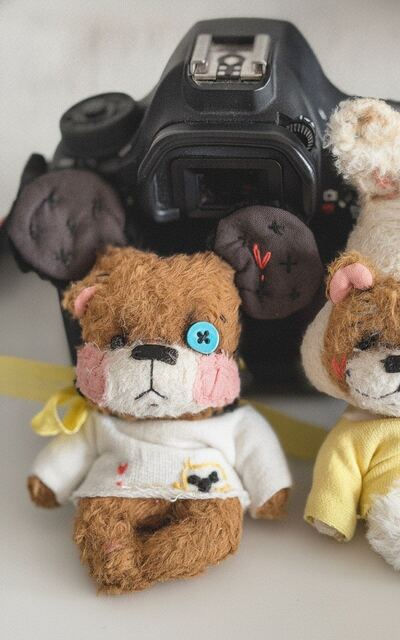
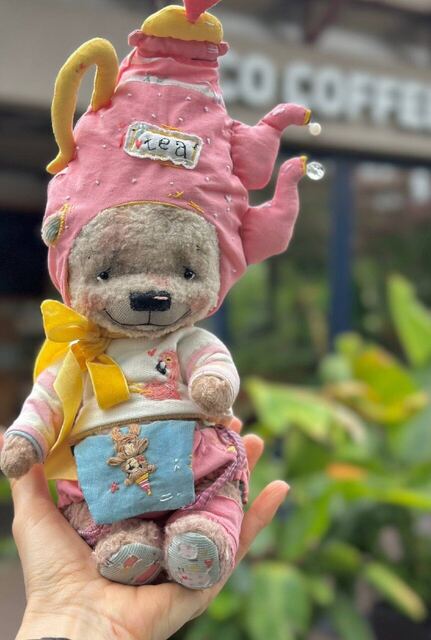
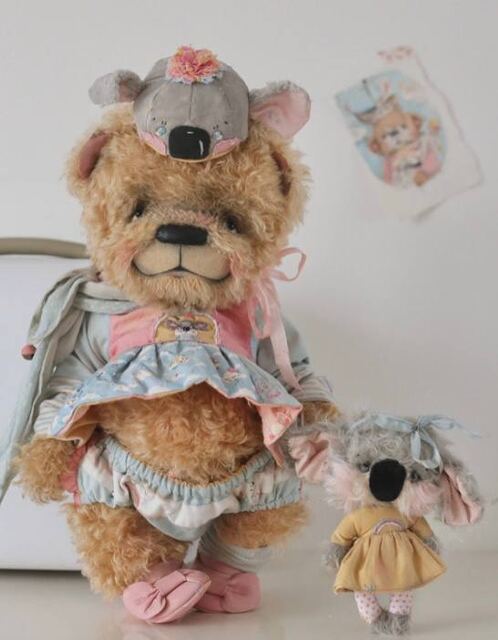
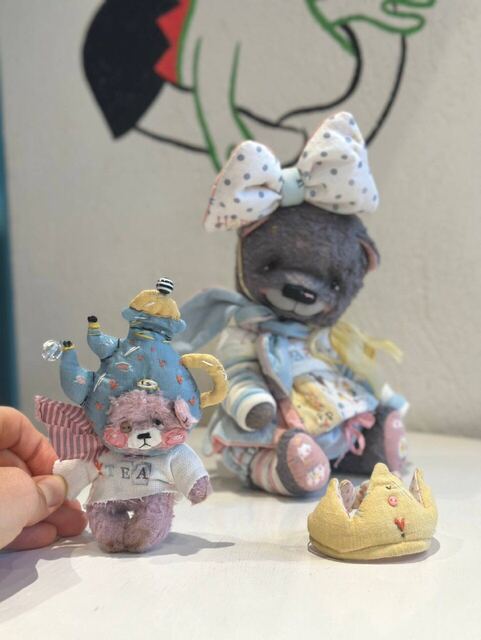
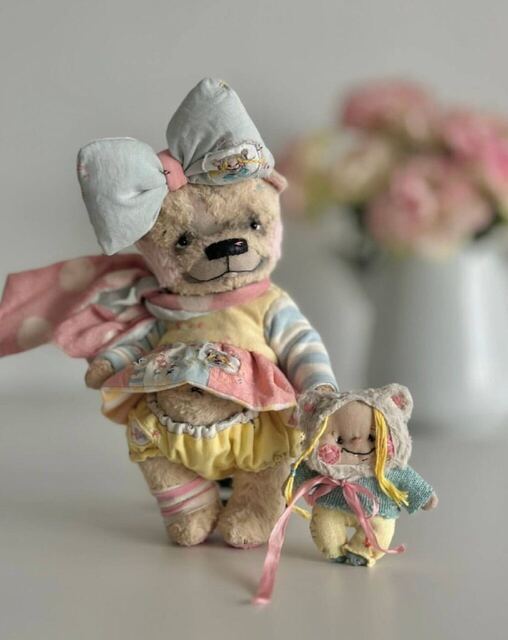
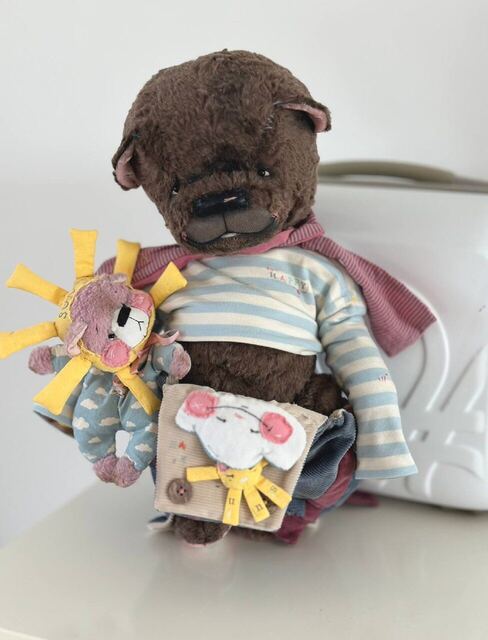
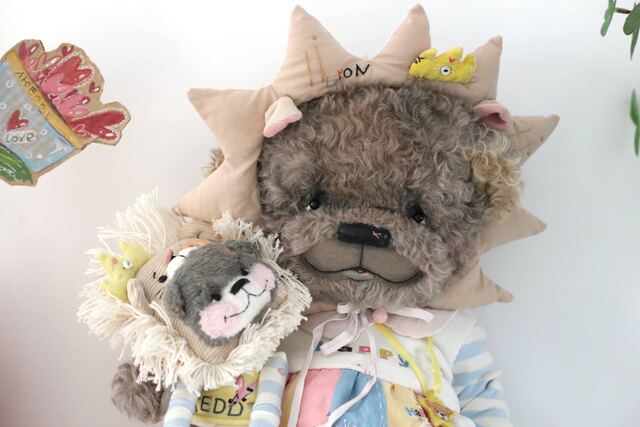
Every piece exists once, so there are never many available at a time. The bears that have found homes are kept here on purpose: they show what the work is like and what will appear next.